
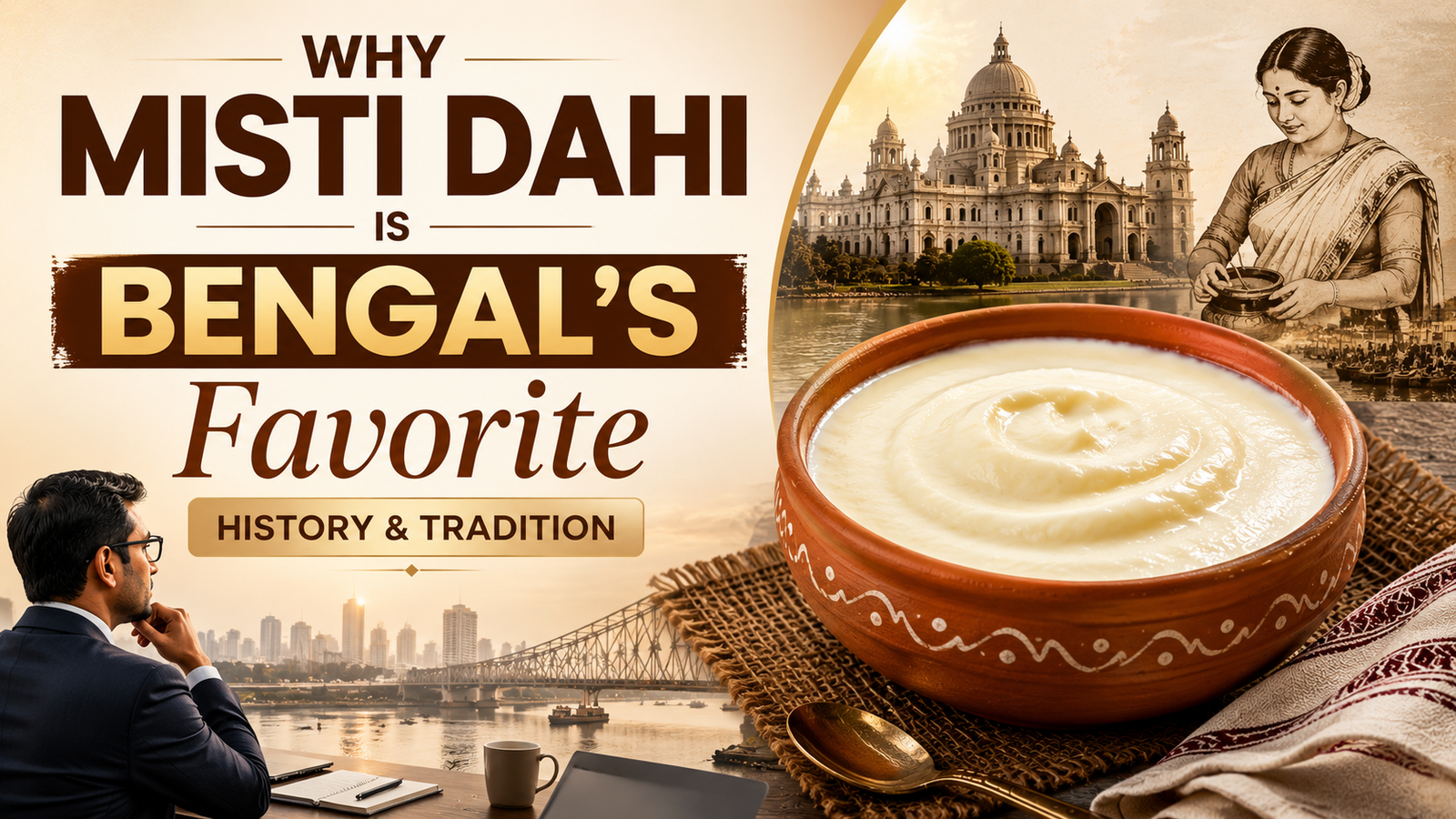

This phrase echoes through Bengali households after every meal, every celebration, every moment that calls for something special. And more often than not, the answer arrives in a beautiful earthen pot – cool, creamy, and caramel-hued: Misti Dahi, Bengal’s most beloved comfort dessert.
For Bengalis, Misti Dahi isn’t just sweetened yogurt. It’s childhood memories of summer afternoons, it’s the mandatory finale to a Sunday lunch of maacher jhol and rice, it’s the sweet note at the end of Poila Boishakh feasts, and it’s the universal gift that says “I care.” From the bustling sweet shops of North Kolkata to the quiet corners of village Bengal, this sweet curd holds a place of honor that transcends generations.
But what makes Misti Dahi so special? Why has this simple dessert captured Bengali hearts for over 150 years? How did a Portuguese innovation become quintessentially Bengali? And what’s the secret behind that signature reddish-brown color and velvety texture that no other traditional dahi can replicate?
In this comprehensive exploration, we’ll journey through the fascinating history of Bengali curd, uncover its cultural significance in Kolkata’s heritage, reveal the art behind authentic preparation, and celebrate why this humble earthen pot of sweetness continues to be Bengal’s favorite dessert.
At Milkaza, we honor this legacy by crafting authentic Misti Dahi using time-tested methods, bringing the taste of tradition to modern Kolkata homes.
Ready to discover why every Bengali’s heart beats a little faster for Misti Dahi? Let’s begin this delicious journey!
Table of Contents
- What Makes Misti Dahi Different from Regular Dahi?
- The Fascinating Origin Story: From Portugal to Bengal
- The Golden Era: How Misti Dahi Became Bengal’s Icon
- The Science Behind the Magic: Why Earthen Pots Matter
- Cultural Significance in Bengali Life
- Regional Variations Across Bengal
- The Art of Making Authentic Misti Dahi
- Famous Misti Dahi Destinations in Kolkata
- Misti Dahi in Bengali Festivals and Celebrations
- Modern Adaptations and Innovations
- Health Benefits of Traditional Misti Dahi
- How Milkaza Preserves This Heritage
- FAQs About Misti Dahi
What Makes Misti Dahi Different from Regular Dahi?
Before we dive into history, let’s understand what sets Misti Dahi apart from regular yogurt or even other sweetened curd varieties.
🎨 The Distinctive Features:
1. The Color – Signature Reddish-Brown:
- Not white like regular dahi
- Not artificially colored
- Natural caramelization creates the hue
- Ranges from light tan to deep reddish-brown
- The darker it is, the more caramelized sugar was used
2. The Texture – Silky, Creamy, Set:
- Not liquid like stirred yogurt
- Not grainy like some homemade dahi
- Set firm like a custard
- Smooth throughout, no whey separation
- Spoonable consistency that holds its shape
3. The Taste – Sweet, Tangy, Caramelized:
- Balanced sweetness: Not cloyingly sweet
- Natural tang: The yogurt culture shines through
- Caramel notes: From the cooking process
- Depth of flavor: Complex, not one-dimensional
- No artificial aftertaste: Pure, authentic taste
4. The Vessel – Traditional Earthen Pot:
- Matir bhaar (clay pot) is traditional
- Porous clay affects fermentation
- Adds subtle earthy notes
- Regulates temperature naturally
- Part of the authenticity
5. The Method – Caramelized Sugar Integration:
- Sugar is caramelized before adding to milk
- Milk is reduced and concentrated
- Special bacterial culture for setting
- Fermentation in warm environment
- Time-honored process, not shortcuts
🆚 Misti Dahi vs. Regular Dahi:
| Feature | Misti Dahi | Regular Dahi |
|---|---|---|
| Sweetness | Sweetened with caramelized sugar | No sugar, naturally tangy |
| Color | Reddish-brown | White/cream |
| Texture | Thick, set, creamy | Varies, often thinner |
| Preparation | Milk reduced, sugar caramelized | Simple fermentation |
| Purpose | Dessert | Side dish, cooking |
| Container | Earthen pots traditionally | Any container |
| Shelf Life | 3-4 days | 5-7 days |
| Cultural Role | Celebratory, special | Everyday staple |
Learn more about different types of dahi: Probiotics in Dahi: Boost Your Gut Health
The Fascinating Origin Story: From Portugal to Bengal
Every great food has an origin story. Misti Dahi’s journey from European shores to Bengali hearts is fascinating.
📜 The Portuguese Connection (16th Century)
The Original Arrival:
- Portuguese traders and missionaries arrived in Bengal in the 1500s
- Brought their tradition of sweetened milk desserts
- Introduced concepts like custard and crème caramel
- Bengali cooks observed and adapted
The Bengali Innovation:
- Bengalis already had strong yogurt-making tradition
- Combined Portuguese caramelization with Bengali curd-making
- Used local ingredients: buffalo milk, jaggery
- Created something entirely new
According to food historians documented in the Journal of Ethnic Foods, this fusion of European and Bengali techniques created a unique dessert that belonged fully to neither culture but became quintessentially Bengali.
🏛️ The Legendary Gour Ghosh (1930s-1940s)
While sweetened curd existed before, Misti Dahi as we know it today has a legendary creator:
The Master Sweet Maker:
- Gour Gopal Ghosh of Shaktigarh, Bardhaman
- Renowned for his exceptional dairy skills
- Experimented with sugar caramelization levels
- Perfected the earthen pot fermentation method
- Created the iconic reddish-brown color
The Breakthrough: Ghosh discovered that:
- Reducing milk concentrates flavor
- Caramelizing sugar adds depth and color
- Earthen pots regulate fermentation perfectly
- The right culture creates the perfect texture
His Misti Dahi became so famous that people traveled from Kolkata to Bardhaman just to taste it!
🚂 The Railway Connection
How Misti Dahi Reached Kolkata:
- Bengal’s railway system expanded in early 1900s
- Sweet makers from Bardhaman, Nabadwip traveled to Kolkata
- Set up shops near railway stations
- Commuters discovered and loved it
- Word spread through the city
Gokul’s Legacy: The famous Gokul sweet shop (established 1940s) in Kolkata popularized Misti Dahi among urban Bengalis, creating the demand that still exists today.
The Golden Era: How Misti Dahi Became Bengal’s Icon
Post-independence Bengal saw Misti Dahi evolve from regional specialty to cultural icon.
📰 1950s-1960s: The Sweet Shops Boom
North Kolkata’s Sweet Empire:
- Dozens of sweet shops opened in Baghbazar, Shyambazar, Hatibagan
- Each claimed secret recipes and superior quality
- Competition drove innovation and quality
- Misti Dahi became as important as Rosogolla and Sandesh
Famous Names Emerge:
- Balaram Mullick
- Girish Chandra Dey
- KC Das
- Nakur Nandy
Each had their signature Misti Dahi, differentiated by:
- Level of caramelization
- Thickness of consistency
- Sweetness balance
- Pot size and shape
🎬 1970s-1980s: Pop Culture Embrace
Cinema Connection:
- Bengali films featured Misti Dahi in family meal scenes
- Symbolized Bengali hospitality and tradition
- Became shorthand for “home” and “comfort”
Literary References:
- Appeared in stories by Sunil Gangopadhyay, Shirshendu Mukhopadhyay
- Poets referenced it as metaphor for Bengali sweetness
- Food writers celebrated it in culinary essays
🌍 1990s-2000s: Global Bengali Recognition
Diaspora Demand:
- Bengalis abroad craved authentic Misti Dahi
- Sweet shops started export services
- Recipe videos went viral (pre-YouTube era: VHS tapes!)
- Became symbol of Bengali identity worldwide
UNESCO Consideration: While not officially listed, food heritage activists have lobbied to recognize Misti Dahi as part of Bengal’s intangible cultural heritage, similar to how Neapolitan pizza or Belgian beer are protected.
The Science Behind the Magic: Why Earthen Pots Matter
The matir bhaar (earthen pot) isn’t just tradition – it’s science.
🏺 The Earthen Pot Advantage
Temperature Regulation:
- Clay is naturally porous
- Allows slow, gradual cooling
- Maintains consistent temperature during fermentation
- Prevents temperature shocks that kill cultures
- Result: Smooth, even setting without grainy texture
Moisture Management:
- Porous walls absorb excess moisture
- Prevents whey separation
- Keeps traditional dahi firm and creamy
- Creates that characteristic dense texture
Flavor Enhancement:
- Clay imparts subtle earthy notes
- Interacts with caramelized sugars
- Creates complex flavor profile
- Can’t be replicated in glass or plastic
Chemical Reactions:
- Clay is alkaline (pH ~8-9)
- Balances lactic acid from fermentation
- Prevents over-souring
- Perfect pH balance for sweet-tart combination
According to research in the International Journal of Food Science, earthenware significantly affects fermented food chemistry, validating what Bengali grandmothers knew intuitively!
🔬 The Fermentation Process
What Happens in That Earthen Pot:
Hour 0-2: Culture added, bacteria begin multiplying
Hour 2-4: Lactose converts to lactic acid, pH drops
Hour 4-6: Proteins coagulate, structure forms
Hour 6-8: Setting completes, flavor develops
Hour 8-12: Refrigeration stops fermentation, flavors meld
Temperature Sweet Spot:
- Too hot (>115°F): Bacteria die
- Too cold (<80°F): Fermentation too slow
- Perfect (95-110°F): The earthen pot naturally maintains this!
Cultural Significance in Bengali Life
Misti Dahi is woven into the fabric of Bengali culture in ways that transcend food.
🏠 In Bengali Households
Sunday Ritual:
- Traditional Bengali Sunday lunch: machher jhol, dal, bhaat, bhaja
- Ends with Misti Dahi
- Not optional – it’s THE dessert
- Bought fresh every Sunday morning
- The whole family shares from earthen pots
Guest Honor:
- Offering sweet curd to guests shows respect
- “Guest came but no Misti Dahi served” = poor hospitality
- Part of otithi satkaar (guest service) tradition
Comfort Food:
- Bad day? Misti Dahi helps
- Celebrating? Misti Dahi enhances
- Sick? Misti Dahi soothes
- Homesick Bengali abroad? Misti Dahi = instant teleportation
🎊 Festival Centerpiece
Durga Puja:
- Bijoya Dashami (final day): Misti Dahi is mandatory
- Served during shondhi pushpanjali (evening prayers)
- Offered as bhog (sacred food offering)
- Part of the feast after immersion
Poila Boishakh (Bengali New Year):
- New Year meal incomplete without Misti Dahi
- Symbolizes sweet beginnings
- Shops report highest sales this day
- Families order dozens of pots
Saraswati Puja:
- Students offer Bengali curd to goddess of knowledge
- Belief: Sweet food = sweet success in studies
- College canteens stock extra Misti Dahi
💒 Wedding Traditions
The Gaye Holud Ceremony:
- Misti Dahi applied to bride/groom’s skin (yes, really!)
- Believed to enhance complexion
- Mixed with turmeric for the ritual
- Later, served to guests as dessert
Wedding Feast:
- Elaborate Bengali wedding meals end with Misti Dahi
- Served in small earthen pots as take-home gifts
- Symbol of new beginnings
- Often accompanies patishapta or payesh
📚 Educational & Social Connections
School Nostalgia:
- Tiffin boxes with Misti Dahi = popular kid
- College canteens serve it
- Study group endings: Misti Dahi treat
- Exam success celebration: Everyone gets Misti Dahi!
Social Bonding:
- Adda (informal gathering) ending ritual
- Neighborhood sweet shop: Community hub
- “Chalun, ektu Misti Dahi khabo” (“Let’s go have some Misti Dahi”) = universal friendship invitation
Regional Variations Across Bengal
Not all Misti Dahi is created equal. Different regions have distinct styles.
🏙️ Kolkata Style
Characteristics:
- Medium sweetness
- Light to medium brown color
- Smooth, custard-like texture
- Served in small earthen cups (85g-200g)
Famous Areas:
- North Kolkata: Traditional stronghold
- Baghbazar: Most concentrated sweet shops
- Shyambazar: Home delivery culture
Signature Shops:
- Balaram Mullick & Radharaman Mullick
- Girish Chandra Dey & Nakur Nandy
- Kali Puja Sweet House
🌾 Bardhaman (Burdwan) Style
Characteristics:
- Sweeter than Kolkata version
- Darker color (deep reddish-brown)
- Thicker texture
- Often served in larger earthen pots (400g)
Why Different:
- Original recipe source
- More jaggery used traditionally
- Longer reduction time
- Water quality affects taste
Famous Source:
- Shaktigarh Misti Dahi: The original, still operating
- People drive 100km from Kolkata just for this!
🏞️ Nabadwip Style
Characteristics:
- Jaggery-based (not refined sugar)
- Darker, almost chocolate brown
- Slightly grainy texture (from jaggery)
- More rustic, earthy flavor
Cultural Note:
- Preferred during religious festivals
- Associated with Vaishnavite traditions
- Lord Chaitanya’s birthplace connection
🌴 South Bengal Style
Characteristics:
- Lighter sweetness
- Paler color
- Coconut jaggery sometimes used
- Influenced by proximity to Odisha
🏔️ North Bengal Style
Characteristics:
- Uses buffalo milk more commonly
- Richer, thicker
- Less common than other regions
- Local variations in hill areas
The Art of Making Authentic Misti Dahi
Understanding the traditional process deepens appreciation.
🥛 Ingredients (For Authentic Preparation)
Essential:
- 2 liters full-fat milk (Milkaza Rich Milk recommended)
- 1 cup sugar (200g)
- 3-4 tablespoons yogurt culture (from previous batch or Milkaza Dahi)
- Earthen pots (matir bhaar)
Optional Traditional:
- 2 tablespoons jaggery (for color and flavor)
- 2 tablespoons condensed milk (for richness)
- Few saffron strands (for special occasions)
👨🍳 Traditional Method (The Way Grandmothers Did It)
Step 1: Reduce the Milk (30-40 minutes)
- Pour milk into heavy-bottomed vessel
- Bring to boil, reduce to simmer
- Keep stirring to prevent burning
- Target: Reduce to 3/4th of original volume
- Milk should coat back of spoon thickly
- Why this matters: Concentration creates richness
Step 2: Caramelize the Sugar (5-7 minutes)
- This is the SECRET step!
- Heat sugar in separate heavy pan
- Medium heat, no water
- Stir continuously
- Sugar will melt → bubble → turn golden
- Color guide: Light amber to medium caramel
- Warning: Goes from perfect to burnt in 30 seconds!
- Remove from heat immediately when right color achieved
Step 3: Combine Carefully (The Crucial Moment)
- Safety first: This will splatter!
- Slowly add hot caramelized sugar to hot reduced milk
- Stir vigorously – mixture will bubble
- Continue stirring until fully integrated
- Color check: Should be beautiful reddish-brown
- If too pale: Sugar wasn’t caramelized enough
- If too dark: Sugar was over-caramelized (slightly burnt taste)
Step 4: Cool to Perfect Temperature
- Let mixture cool to lukewarm (40-45°C / 104-113°F)
- Temperature test: Should be comfortably warm to touch
- Too hot = bacteria die
- Too cold = won’t set properly
- Pro tip: Takes about 15-20 minutes
Step 5: Add Culture (The Life Begins)
- Take yogurt culture in small bowl
- Add 2-3 tablespoons of warm milk mixture
- Whisk until smooth (no lumps!)
- Pour back into main mixture
- Stir gently but thoroughly
- Culture quality matters: Fresh, live culture = smooth traditional dahi
Step 6: Transfer to Earthen Pots
- Pour mixture into matir bhaar
- Fill almost to top
- Don’t disturb after pouring
- Cover with lids or plates
Step 7: Create Perfect Environment
- Temperature: Need consistent warmth (95-100°F)
- Traditional method: Place in oven with light on
- Alternative: Wrap in towels, place in warm spot
- Time: 6-8 hours (overnight is perfect)
- No touching! Disturbance prevents proper setting
Step 8: Refrigerate & Serve
- Once set firm, refrigerate minimum 3-4 hours
- Flavors meld when cold
- Serve directly from earthen pots
- Storage: Up to 3-4 days refrigerated
💡 Pro Secrets from Traditional Sweet Makers:
✅ Milk quality is everything: Use full-fat, fresh milk (Milkaza Fresh Milk)
✅ Caramelization is an art: Practice makes perfect, don’t rush
✅ Culture freshness: Week-old culture = weak setting
✅ Earthen pots: Soak new pots in water for 30 minutes before use
✅ No shortcuts: Can’t microwave or rush the process
✅ Seasonal variation: Summer sets faster, winter needs extra warmth
Famous Misti Dahi Destinations in Kolkata
For the authentic experience, these legendary spots are pilgrimage sites for Misti Dahi lovers.
🏆 The Legendary Shops
1. Balaram Mullick & Radharaman Mullick (Est. 1885)
- Location: Multiple branches, original in Bhowanipore
- Specialty: Perfectly balanced sweetness
- Price: ₹60-₹100 per pot
- Why special: Consistent quality for 135+ years
- Tourist rating: Must-visit!
2. Girish Chandra Dey & Nakur Nandy (Est. 1844)
- Location: Ramdulal Sarkar Street, North Kolkata
- Specialty: Traditional darker style
- Signature: Extra thick, extra sweet
- Heritage: Oldest sweet shop in Kolkata
- Local favorite: Generations of loyalty
3. KC Das (Est. 1930s)
- Location: Multiple locations citywide
- Specialty: Medium-sweet, lighter color
- Innovation: Modern packaging options
- Delivery: Wide delivery network
4. Sen Mahasay (Est. 1918)
- Location: Cornwallis Street, Central Kolkata
- Specialty: Jaggery-based sweet curd
- Texture: Slightly grainy (authentic style)
- Cult following: Specific clientele loves only this
5. Kali Puja Sweet House
- Location: Lake Market area
- Specialty: Neighborhood institution
- Value: Best price-to-quality ratio
- Reliability: Never disappoints
🛣️ The Pilgrimage Route
Shaktigarh, Bardhaman:
- Why go: The original, legendary Misti Dahi
- Distance from Kolkata: ~100km
- Journey: 2-hour drive via NH-19
- Experience: Small shops, huge reputation
- Order: Call ahead, pots sell out by noon!
- Pro tip: Order 2-3 days in advance during Durga Puja
The Shaktigarh Experience: Imagine a small Bengali town where every other shop sells Misti Dahi. Walk through narrow lanes, earthen pots cooling on racks, the aroma of caramelized milk filling the air. Pick a pot, taste right there – this is Bengali curd pilgrimage!
Misti Dahi in Bengali Festivals and Celebrations
Every major Bengali occasion has a Misti Dahi moment.
🪔 Durga Puja (September-October)
The Significance:
- Mahalaya (first day): Marks beginning of preparations
- Saptami, Ashtami, Navami: Temple offerings include Misti Dahi
- Bijoya Dashami: THE day – highest consumption
The Numbers:
- Kolkata’s sweet shops sell 500,000+ pots during the 5-day festival
- Many shops open 24/7
- Advance orders start 15 days before
- Some families order 50-100 pots for gatherings
The Ritual:
- After immersion (visarjan), families gather
- Feast includes luchi, cholar dal, begun bhaja
- Ends with Misti Dahi
- Symbol of both ending (goodbye to Ma Durga) and beginning (year ahead)
🌸 Poila Boishakh (April 14/15)
Bengali New Year:
- Starts with panta bhat (fermented rice) and fried fish
- Later, elaborate lunch
- Misti Dahi symbolizes sweet new beginning
- Shops decorated, special packaging
- Often served with notun gurer payesh (new jaggery rice pudding)
📖 Saraswati Puja (January-February)
The Students’ Festival:
- Goddess of knowledge worshipped
- Misti Dahi offered as bhog
- Belief: Eating sweet food before exams brings success
- College canteens stock extra supplies
- Study groups end with sweet curd sharing
🎂 Birthday Celebrations
Modern Bengali Tradition:
- Cake is for cutting, photos
- Misti Dahi is for actual eating!
- Especially for elder generation
- Children’s birthdays: Both cake and Bengali curd
- Shows respect for tradition while embracing modernity
💑 Romantic Occasions
Bengali Valentine’s Day:
- Young couples share Misti Dahi at sweet shops
- Symbol of sweet relationship
- More intimate than expensive restaurants
- The “adda” culture: Hours of conversation over shared pots
Modern Adaptations and Innovations
While tradition remains sacred, innovation keeps Misti Dahi relevant.
🆕 Contemporary Variations
Flavor Innovations:
- Chocolate Misti Dahi: Fusion with cocoa
- Fruit-infused: Mango, strawberry, mixed fruit
- Kesar (Saffron): Premium variant
- Rose: Subtle floral notes
- Jaggery-only: Health-conscious option
Packaging Evolution:
- Traditional earthen pots (still most popular)
- Plastic containers (longer shelf life)
- Glass jars (premium segment)
- Single-serve cups (modern convenience)
- Gift boxes (festival season)
Size Options:
- Mini (85g): Individual serving, Milkaza offers this
- Regular (200g): Standard size
- Large (400g): Family sharing
- Party packs: Bulk orders
🚀 Technology Integration
Online Ordering:
- Most legendary shops now on Swiggy/Zomato
- Milkaza’s online ordering: Fresh daily delivery
- Same-day delivery even for earthen pot versions
- Subscription services for weekly delivery
Cold Chain Management:
- Temperature-controlled delivery vehicles
- Ensures freshness during transit
- Enables pan-India shipping
- Bengalis in Mumbai, Delhi, Bangalore can now get authentic taste
Quality Assurance:
- FSSAI certification now mandatory
- Lab testing for bacterial counts
- Standardized recipes (while maintaining tradition)
- Hygiene certifications
🌍 Global Reach
International Availability:
- Bengali diaspora in USA, UK, Canada
- Indian grocery stores stock frozen versions
- Some shops ship internationally (specialized packaging)
- Homemade recipe videos help maintain tradition abroad
Cultural Ambassadors:
- Food bloggers showcase Misti Dahi globally
- Bengali restaurants worldwide feature it
- Cooking shows demonstrate authentic preparation
- UNESCO intangible heritage discussion
Health Benefits of Traditional Misti Dahi
Beyond taste and culture, Misti Dahi offers nutritional value.
💪 Nutritional Profile (per 100g)
- Calories: 110-130 kcal
- Protein: 4-5g
- Carbohydrates: 18-22g (from milk lactose + added sugar)
- Fat: 3-4g
- Calcium: 140-160mg (12-15% daily value)
- Probiotics: 100 million+ CFU (colony-forming units)
- Vitamin B12: 10-15% daily value
- Riboflavin (B2): 12-18% daily value
🔬 Probiotic Power
Live Cultures:
- Contains Lactobacillus bulgaricus and Streptococcus thermophilus
- These probiotics survive stomach acid
- Reach intestines alive and active
- Support gut microbiome diversity
Digestive Benefits:
- Aids lactose digestion (ironic but true!)
- Reduces bloating and gas
- Supports regular bowel movements
- Helps manage IBS symptoms in some people
Learn more: Probiotics in Dahi: Boost Your Gut Health
🦴 Bone Health
Calcium Absorption:
- Fermentation increases calcium bioavailability
- Vitamin D (if using fortified milk) aids absorption
- Beneficial for: Growing children, pregnant women, elderly
🩺 Ayurvedic Perspective
According to traditional Ayurvedic texts:
- Sweet yogurt is cooling (sheeta)
- Balances pitta dosha
- Good for summer consumption
- Aids digestion when consumed after meals
- Calms the mind (considered sattvic food)
⚖️ Moderation Matters
The Balance:
- Misti Dahi contains added sugar (18-25g per serving)
- Healthier than cake or candy, but still a dessert
- Recommended: 1-2 servings per week
- Daily consumption: Choose unsweetened regular dahi
For Diabetics:
- Can be enjoyed occasionally
- Monitor blood sugar response
- Consider jaggery-based versions (lower GI)
- Pair with protein/fiber to slow sugar absorption
- Always consult healthcare provider
How Milkaza Preserves This Heritage
At Milkaza, we honor Bengal’s Misti Dahi legacy while meeting modern needs.
🏺 Our Approach
Traditional Methods:
- Milk reduction for concentrated flavor
- Sugar caramelization for authentic color
- Live culture fermentation
- Time-honored setting process
Quality Ingredients:
- Farm-fresh full-fat milk
- No artificial colors or preservatives
- Active probiotic cultures
- Natural sweetening
Modern Standards:
- FSSAI certified facility
- Daily quality testing
- Hygienic preparation
- Temperature-controlled storage
📦 Convenience with Authenticity
Size Options:
- 85g individual pots: Perfect for one
- 200g standard pots: Traditional serving
- 400g family size: Sharing portions
Fresh Daily Delivery:
- Made fresh every morning
- Delivered across Kolkata
- Same-day or scheduled delivery
- Subscription options for regular orders
Packaging Innovation:
- Traditional earthen pot aesthetic
- Food-grade containers
- Sealed for freshness
- Recyclable materials
🎯 Our Promise
✅ Authentic taste: Like your favorite sweet shop
✅ Consistent quality: Every batch tested
✅ Fresh daily: Never old stock
✅ Fair pricing: Premium quality, reasonable cost
✅ Heritage respect: Honoring Bengali traditions
Order Authentic Misti Dahi:
📞 Call: +91 8981818740
🌐 Visit: milkaza.com/products
📍 Location: 56L Bidhannagar Road, Ultadanga, Kolkata – 700067
Frequently Asked Questions (FAQs)
Q1: What is Misti Dahi and how is it different from regular yogurt?
A: Misti Dahi (sweet curd) is a traditional Bengali dessert made by fermenting reduced milk sweetened with caramelized sugar. Unlike regular yogurt, it’s sweetened, has a distinctive reddish-brown color from caramelization, thicker texture, and is traditionally set in earthen pots. It’s served as dessert, not a side dish.
Q2: Why is Misti Dahi so popular in Bengal?
A: Misti Dahi’s popularity stems from 150+ years of cultural integration. It’s part of every celebration (Durga Puja, Poila Boishakh), symbolizes Bengali hospitality, carries childhood nostalgia, and represents regional identity. The perfect balance of sweet-tangy taste, connection to heritage, and versatility make it irreplaceable in Bengali cuisine.
Q3: Can I make Misti Dahi at home?
A: Yes! The traditional method requires reducing milk, caramelizing sugar, combining them, adding yogurt culture, and fermenting in a warm place for 6-8 hours. Earthen pots are ideal but not mandatory. For guaranteed results, try Milkaza’s ready-made Misti Dahi which follows authentic traditional methods.
Q4: What gives Misti Dahi its reddish-brown color?
A: The signature color comes from caramelized sugar. When sugar is heated until it melts and turns amber-brown (caramelization), then mixed with hot milk, it imparts a beautiful reddish-brown hue. This isn’t artificial coloring – it’s a natural chemical reaction called the Maillard reaction and caramelization.
Q5: Why are earthen pots used for Misti Dahi?
A: Matir bhaar (earthen pots) serve multiple purposes: (1) Porous clay regulates temperature perfectly during fermentation, (2) Absorbs excess moisture preventing whey separation, (3) Adds subtle earthy flavor, (4) Creates ideal pH balance, and (5) Maintains cultural authenticity. Scientific studies confirm clay vessels affect fermented food chemistry positively.
Q6: Is Misti Dahi healthy?
A: In moderation, yes! Misti Dahi provides probiotics (gut health), protein, calcium, and B vitamins. However, it contains added sugar (18-25g per serving), so it’s best enjoyed occasionally as dessert rather than daily. For everyday consumption, choose unsweetened regular dahi.
Q7: What’s the difference between Kolkata-style and Bardhaman-style Misti Dahi?
A: Bardhaman (Burdwan) style is sweeter, darker (deep reddish-brown), thicker, and often uses jaggery. Kolkata style is medium-sweet, lighter brown, smoother texture, and uses refined sugar. Bardhaman is the original; Kolkata adapted it for urban tastes. Both are delicious, just different preferences.
Q8: How long does Misti Dahi last?
A: Fresh Misti Dahi lasts 3-4 days when refrigerated. Unlike regular dahi (5-7 days), the added sugar and reduced milk make it more perishable. Always check for smell and taste before consuming. Milkaza’s Misti Dahi comes with clear expiry dates for safety.
Q9: Can diabetics eat Misti Dahi?
A: Diabetics can enjoy Misti Dahi occasionally in small portions, preferably jaggery-based versions which have lower glycemic index. Monitor blood sugar response, pair with protein/fiber, and consult your healthcare provider for personalized advice. Consider unsweetened alternatives for regular consumption.
Q10: Where can I buy authentic Misti Dahi in Kolkata?
A: Famous options include Balaram Mullick, Girish Chandra Dey, KC Das, and Sen Mahasay. For fresh daily delivery, Milkaza offers authentic Misti Dahi in multiple sizes across Kolkata. Order online or call +91 8981818740.
Q11: What’s the best way to serve Misti Dahi?
A: Misti Dahi is best served chilled, directly from the earthen pot or container. Traditionally, it’s eaten with a spoon, savoring each creamy bite. Some enjoy it with a sprinkle of nuts or after a meal as dessert. Never mix or stir – it should maintain its set texture.
Q12: Why do Bengalis love Misti Dahi so much?
A: Beyond taste, Misti Dahi represents Bengali identity. It’s comfort food that connects generations, marks celebrations, symbolizes hospitality, and carries memories of home. For Bengalis worldwide, it’s not just dessert – it’s a piece of culture, a taste of heritage, and a connection to roots.
Q13: What festivals is Misti Dahi associated with?
A: Misti Dahi is integral to Durga Puja (especially Bijoya Dashami), Poila Boishakh (Bengali New Year), Saraswati Puja, weddings (Gaye Holud ceremony), birthdays, and family gatherings. It’s also offered as temple prasad and served during religious ceremonies.
Q14: Can Misti Dahi be frozen?
A: Not recommended. Freezing changes the texture significantly – it becomes grainy and separates upon thawing. The smooth, creamy consistency is ruined. Misti Dahi is best enjoyed fresh within 3-4 days of preparation. Order appropriate quantities from Milkaza to avoid waste.
Q15: How is Misti Dahi different from Greek yogurt or Western desserts?
A: Misti Dahi is uniquely Bengali – fermented (not just sweetened), caramelized (not plain sugar), set firm (not stirred), and culturally significant (not just food). Greek yogurt is thicker but unsweetened. Western custards/puddings aren’t fermented. Misti Dahi stands alone as a sweet, probiotic, culturally-rooted Bengali creation.
Conclusion: More Than Just Sweet Curd
Misti Dahi is Bengali culture in a earthen pot – simple in appearance, profound in significance. It’s the taste of Sunday afternoons, the sweetness of Durga Puja evenings, the comfort of home, and the pride of heritage.
From its fascinating journey from Portuguese shores to Bengali hearts, through the legendary Gour Gopal Ghosh’s innovations, to its modern avatar in homes across Kolkata and beyond – Misti Dahi has remained constant in a changing world. It connects generations, preserves traditions, and continues to bring joy to millions.
Whether you savor it from a legendary Bardhaman shop after a two-hour pilgrimage, pick it up from your neighborhood sweet shop on Sunday morning, or order authentic Misti Dahi from Milkaza for convenient home delivery, you’re participating in a 150-year-old tradition that defines Bengali identity.
The next time you open that earthen pot and see the beautiful reddish-brown surface, take a moment. Remember the sweet makers who perfected this art, the grandmothers who made it at home, the festivals it graced, and the countless Bengali hearts it has sweetened.
Ektu mishti mukh kore nin! (Sweeten your mouth!)
Experience Authentic Misti Dahi Today
👉 Order Milkaza Misti Dahi – Available in 85g, 200g, 400g
👉 Explore Our Dairy Range – Fresh milk, dahi, ghee, paneer
👉 Read More About Bengali Traditions – Heritage recipes and stories
👉 Contact Us – For bulk orders and subscriptions
📞 Call Now: +91 8981818740
🌐 Visit: milkaza.com
📍 Location: 56L Bidhannagar Road, Ultadanga, Kolkata – 700067
✉️ Email: milkazaindia@gmail.com
Complete Your Bengali Kitchen:
- Misti Dahi – The heritage dessert
- Classic Dahi – For everyday use
- Fresh Full Cream Milk – Bengali recipes
- Pure Cow Ghee – Traditional cooking
Related Bengali Heritage Articles:
- Probiotics in Dahi: Boost Your Gut Health Naturally
- 5 Easy Raita Recipes Using Fresh Milkaza Dahi
- Rich Malai Milk: The Secret to Creamy Chai
- The Art of Using Ghee in Indian Sweets
- Understanding Different Milk Variants
📸 Share Your Misti Dahi Moments!
Tag @MilkazaIndia with your Misti Dahi celebrations – festivals, family gatherings, or simple Sunday joys. Let’s celebrate Bengali heritage together!
💌 Subscribe to Milkaza’s Bengali Heritage Newsletter:
Get traditional recipes, festival specials, cultural stories, and exclusive offers. Download our free “Bengali Desserts Through Generations” eBook!
About Milkaza:
Milkaza is Kolkata’s premium dairy brand dedicated to preserving Bengali food heritage while delivering modern convenience. We craft authentic Misti Dahi using traditional methods passed down through generations, made fresh daily from farm-sourced milk. From our signature Misti Dahi to fresh milk, probiotic dahi, and pure ghee – every product honors Bengali culinary traditions with uncompromising quality. Because heritage tastes better when it’s fresh. Amader mishti, apnader tradition. (Our sweets, your tradition.)